Russia imports billions of dollars in food annually. Learn which Indian agricultural products are in high demand—from Basmati rice and tea to spices and packaged foods—and how to navigate strict phytosanitary rules.
Feeding a Nation: The Indian “Kitchen of the World” Opportunity
When global food supply chains were disrupted in recent years, Russia faced a challenge. While it is a grain superpower itself, it relies heavily on imports for tropical commodities, fruits, vegetables, and processed foods.
The departure of many Western FMCG brands from Russian shelves has created a vacuum in the supermarkets of Moscow and St. Petersburg. Russian consumers are looking for high-quality replacements for their coffee, tea, spices, and packaged goods.
India, as one of the world’s largest agricultural producers, is the natural partner to fill this gap. The demand is there, but exporting food is different from exporting machinery. It requires navigating a complex web of safety regulations.
Here is a guide to what Russia wants to buy and how to successfully sell it.
1. The High-Demand Shopping List
Russian buyers are actively seeking reliable suppliers for the following categories:
A. Commodities (The Staples)
- Rice: Demand for both high-quality Basmati (for premium retail) and non-Basmati rice (for mass market catering) is consistently high.
- Tea & Coffee: India has traditionally been a major supplier of tea. Now, there is a growing market for premium Indian coffee beans and instant coffee to replace European brands.
- Spices: Russia cannot grow black pepper, cardamom, cumin, or turmeric. India is the undisputed supplier of choice here.
B. Fresh Produce & Processed Foods (FMCG)
- Fruits & Vegetables: Grapes, pomegranates, mangoes, and processed fruit pulp.
- Packaged Foods: Ready-to-eat meals, snacks, biscuits, and confectionery that can replace Western brands on supermarket shelves.
- Marine Products: Frozen shrimp and fish.
2. The Gatekeeper: Understanding “Rosselkhoznadzor”
If you are exporting food, standard customs clearance is not your biggest hurdle. Your biggest hurdle is Rosselkhoznadzor (The Federal Service for Veterinary and Phytosanitary Surveillance).
They are extremely strict. A single pest found in a shipment of rice, or pesticide residue above the allowed limit in fruit, can lead to the entire container being rejected or destroyed at your cost.
- The Rule: You must have a Phytosanitary Certificate issued by Indian authorities (NPPO) that perfectly matches the import requirements of Russia. Any discrepancy in paperwork leads to immediate rejection.
3. Cracking the Retail Chains (X5, Magnit, Lenta)
Getting your product to the port is only half the battle. The real win is getting it onto supermarket shelves.
Russian retail is dominated by a few massive chains. Selling to them requires:
- Consistent Volume: They need partners who can supply hundreds of tons monthly, not just one container per year.
- Perfect Labeling: Every consumer pack must have a Russian language label printed correctly with the EAC mark, ingredients, and nutritional information in Cyrillic. Stickering by hand at the destination is too expensive.
- Barcoding: Compliance with international GS1 barcoding standards is mandatory for retail scanning.
4. The Logistics Advantage (Reefers on INSTC)
For perishable goods (fruits, certain processed foods), time is shelf-life.
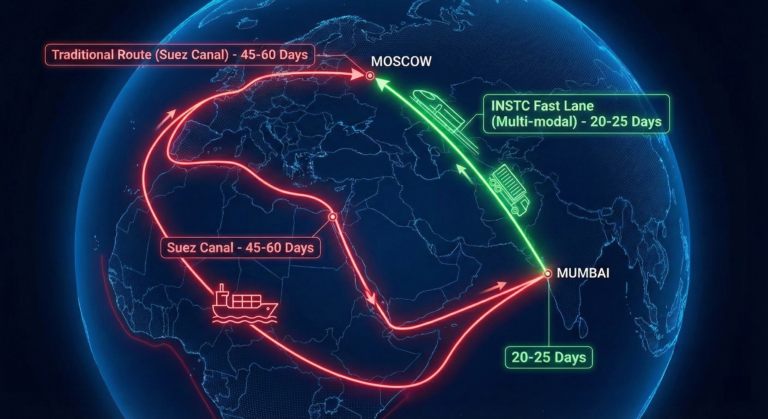
The traditional 45-day sea route via Suez is too long for many perishables. The INSTC Route (via Iran), taking only 20-25 days, is a game-changer for food exporters. It allows you to ship produce that arrives fresher, giving it a longer viable selling window in Russian stores.
Conclusion: Quality is Key
Russian buyers are price-conscious, but they are quality-obsessed when it comes to food. Indian exporters who cut corners on quality will fail. Those who invest in proper sorting, grading, and compliant packaging will build generational business relationships.
Ready to export agricultural products to Russia? Altai Global helps you navigate the Rosselkhoznadzor compliance maze. We review your phytosanitary documentation before shipment and can connect qualified suppliers with Russian food importers and retail distributors.
[Get a Phytosanitary Compliance Check]